2026 How to Charge an Electric Motorbike at Home
Home charging electric motorbike ownership can feel wonderfully simple: park, plug in, and wake to a ready battery. Yet the right routine depends on your motorcycle’s battery, charger, and manufacturer guidance. A wall socket that suits one model may not suit another. Small details matter.
Ravi Shah, an electric-mobility charging specialist, puts it this way: “Let the bike’s manual set the routine, not guesswork.” Check the recommended charger and charging location before your first session. Use a sound, properly rated outlet, keep the charger dry, and leave space around it for ventilation. Avoid damaged cables, loose sockets, and improvised connections. If the outlet becomes unusually warm, stop charging and ask a qualified electrician to inspect it. That extra step can feel inconvenient. It is still cheaper than ignoring a warning sign.
This guide explains how to prepare a home charging spot, connect the charger, and understand everyday charging times. It also covers battery care, overnight charging considerations, and simple checks that can reveal problems early. Charging speed varies with battery size, charger output, temperature, and the bike’s own controls. So, treat online estimates as starting points, not promises. A neat garage setup is useful, but a dry, secure place matters more than perfect cable management. Even experienced riders can overlook a worn plug. A quick look before each charge helps. The routine is not complicated, though it deserves attention.
Check Your Electric Motorbike and Charger Specifications
Before charging at home, read the motorbike’s manual and the labels on both the battery and charger. Confirm the charger’s output voltage, current, connector, and charging profile match the requirements for your battery chemistry. A plug that fits is not proof of compatibility. Also check the charger’s input rating against your household supply. Small detail, big difference. Note any stated temperature limits, too; a cold garage or hot shed may fall outside the permitted range.
Tips: Use a dry, ventilated area and a suitable wall outlet. Keep the charger uncovered, and avoid extension cords unless the manual allows them. Check the cable and casing for damage before each charge.
Follow the bike maker’s instructions for charging the battery in place or removing it. Set the bike on a stable surface, then connect the charger in the specified order. Stop if the battery is swollen, unusually hot, or smells strange, and seek qualified service. It is easy to overlook a tiny label while rushing to plug in. I would check it twice, especially after replacing a charger. Don’t guess at unfamiliar symbols; consult the manual or a qualified technician.
Choose a Safe Home Charging Location and Outlet
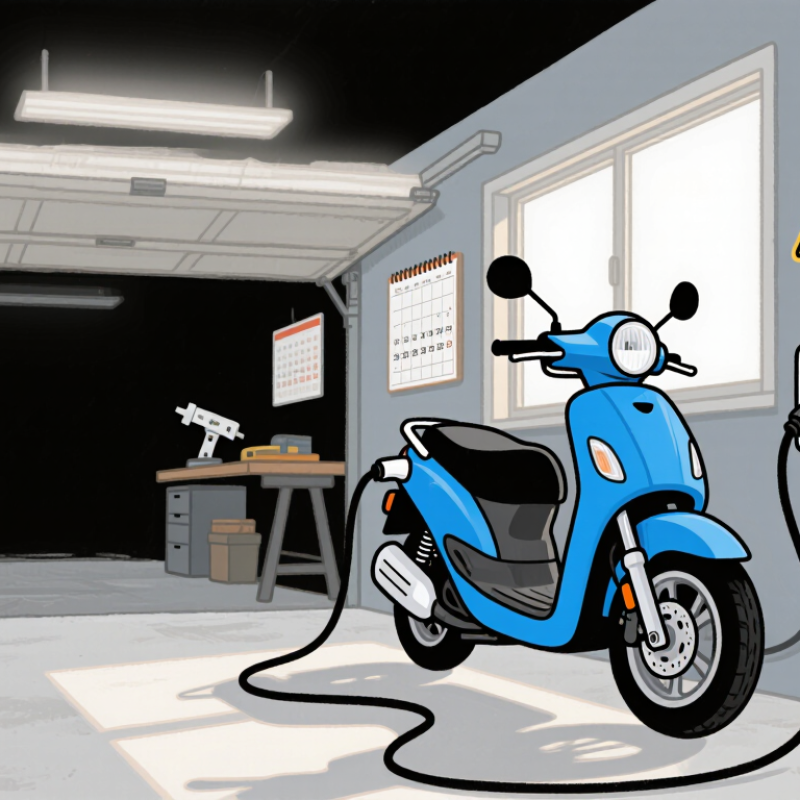
Choose a dry, level place with clear space around the motorbike. A garage corner can work if air can circulate and the charger stays away from fuel, paper, fabrics, and other easily ignited materials. Keep the bike and charging equipment out of rain and away from sinks or puddles. Leave the route to the door open. Keep it accessible.
Use an outlet that matches the motorbike and charger instructions. A socket that fits is not automatically suitable. Avoid overloaded power strips and extension cords unless the manual explicitly allows them. Check the outlet for looseness, cracks, or dark marks before charging. If the plug feels unusually hot, or you notice a burning smell, stop charging and have the outlet checked by a qualified electrician. Small details matter.
I would also avoid placing the charger where someone might kick or cover it. Follow the manual’s guidance on ventilation, charging time, and whether the battery should cool before charging. If the outlet’s condition is uncertain, do not guess. Ask an electrician to assess the circuit. A tidy charging spot helps, but it cannot compensate for a damaged socket or unsuitable wiring.
Prepare the Battery and Connect the Charger
Park the motorbike on a dry, level surface with clear space around it. Switch it off, then check the battery and charging port for moisture, cracks, or loose debris. Do not charge a battery that looks damaged or unusually swollen. Let a recently used battery cool before connecting it; warmth can be normal, but it should not feel hot. Small pause.
Check the charger label against the battery’s specified voltage and chemistry. Use a charger approved for that battery, and follow the manual’s connection order, since designs differ. Align the connector carefully and never force it. I still find this step easy to rush, especially when the plug looks nearly right. That is a useful moment to stop and check again.
Connect the charger to a suitable indoor outlet as directed by the manual, then confirm that its indicator shows charging. Keep the battery and charger away from fabric, water, and direct heat. Stay nearby during charging, and disconnect power if you notice a burning smell, unusual heat, or a damaged cable. Don’t improvise with a different charger just because its plug fits.
2026: How to Charge an Electric Motorbike at Home
Prepare the battery and connect the charger. The chart shows estimated charging time for different battery capacities using a 0.5 kW charger.
Estimates assume 85% effective charging power: time = battery capacity ÷ (0.5 kW × 0.85). Actual charging time varies with the battery, charger, temperature, and charging profile. Check your motorbike’s manual, use its approved charger, and charge in a dry, well-ventilated area.
Monitor the Charging Process and Disconnect Safely
The IEA’s Global EV Outlook 2024 estimates nearly 10 million electric two- and three-wheelers were sold worldwide in 2023. That growth makes careful home charging more relevant. Stay nearby. Use the charger specified for your motorbike, and place it on a dry, stable surface away from paper, fabric, and direct heat. Check the cable and plug before connecting. A cracked casing or loose connector deserves attention, not another charge. Watch the status lights and feel for unusual heat without touching exposed electrical parts. Stop charging if you notice swelling, a sharp chemical smell, smoke, or crackling; move away and contact emergency services if there is fire or smoke.
When charging is complete, follow the manual’s exact shutdown and unplugging order; connector sequences can differ. Grip the plug, never the cable, and avoid pulling it under tension. Let the battery cool as instructed before storing it. I admit, waiting nearby can feel tedious, especially when the indicator barely changes. Still, I would rather check once more than assume a fault is harmless. Keep the charging area clear, and make sure a working smoke alarm can be heard nearby. The IEA figure describes market sales, not battery-fire risk, so it should not be treated as a safety statistic.
Store the Charger and Maintain the Battery
After riding, let the battery cool before connecting the charger, unless its manual says otherwise. Use the supplied charging equipment and follow the motorbike maker’s instructions for your battery type. Keep the charger in a dry, ventilated spot, away from heaters, direct sunlight, and damp floors. Coil the cable loosely, and check its insulation and plug for damage before each use. Give it room. A cramped cupboard can trap warmth and make small faults harder to notice.
Tips: Unplug by holding the plug, not pulling the cable. Keep the charging area clear of laundry, paper, and other clutter. After charging, let the equipment cool before storing it. I sometimes forget this step; setting a small reminder by the outlet can help.
Battery care is mostly steady routine. Avoid leaving the battery completely drained for long periods, and use the storage charge level recommended in its manual if the bike will sit unused. Check the battery occasionally during long storage, following the maker’s guidance on whether it needs topping up. Keep it within the temperature range specified for charging and storage. If you notice unusual heat, swelling, a sharp smell, or a damaged casing, stop using it and seek qualified service. Don’t open the battery pack yourself.
FAQS
Park on a dry, level surface with clear space around it. Keep the charger away from water, fabric, paper, and direct heat.
Let it cool first, unless the manual says otherwise. Warmth can be normal, but the battery should not feel hot.
Match its voltage and battery chemistry to the specifications. Use the approved charger and follow the manual’s connection order. A plug that fits is not enough.
Look for moisture, cracks, debris, damaged cables, or loose connectors. Don’t charge a damaged or swollen battery. I still find this step easy to rush.
Yes. Watch the indicator and check for unusual heat, smells, or sounds. Stay close.
Stop charging and move away if there is smoke or fire. Contact emergency services if either occurs. Have a damaged battery checked by qualified service.
Follow the manual’s shutdown order, since connector sequences differ. Hold the plug, not the cable. Let the equipment cool, then store it in a dry, ventilated place.
Avoid leaving it completely drained for long periods. Follow the manual’s recommended storage charge and temperature range. Check it occasionally; I sometimes forget, so a reminder may help.
No. Don’t open the pack yourself. Stop using it if its casing is damaged, and seek qualified service.
Conclusion
Home charging electric motorbike safely starts with checking the motorbike’s manual, battery requirements, and charger specifications to confirm they are compatible. Choose a dry, well-ventilated place away from heat, water, and items that could obstruct the charging area. Use a suitable household outlet and check that the charger cable and plug are undamaged before connecting anything.
Before charging, park the motorbike securely and prepare the battery as instructed by its manufacturer. Connect the charger in the recommended order, then keep an eye on the process and watch for unusual heat, smells, or warning indicators. When charging is complete, switch off and unplug the charger safely, then disconnect it from the motorbike. Store the charger in a clean, dry place, and care for the battery by following the recommended charging and storage practices. These simple habits can support reliable charging and help preserve battery performance over time.

Blog Tags: