Award-winning British electric motorcycles — now in the USA
Flexible finance available — Learn more
New to riding? Explore the New Rider Program
0%

A second battery can change more than a motorcycle’s range. It can affect charging time, weight, handling, storage, and the daily routine of riders who travel beyond city streets. For global buyers, those details matter as much as the headline range. A bike that feels balanced on a short commute may feel cumbersome on a long climb, especially with two battery packs on board.

This guide compares ten dual-battery electric motorcycles through practical questions: Can both packs be removed easily? Does the charger support convenient top-ups? How does added weight affect low-speed control? What does the manufacturer actually specify about range, capacity, and charging? These are useful checks, not guarantees. Real-world performance shifts with speed, temperature, hills, tire pressure, and rider load.

A verified expert quotation was not provided with the source material, so no statement is attributed to a named specialist here. That matters: invented authority can mislead buyers. The Dual battery electric motorcycle market also changes quickly, and specifications may vary by model year or region. Treat published figures as a starting point, then confirm them with the manufacturer or dealer. Some comparisons will remain imperfect. Battery layouts are not always reported consistently, and that gap deserves scrutiny.
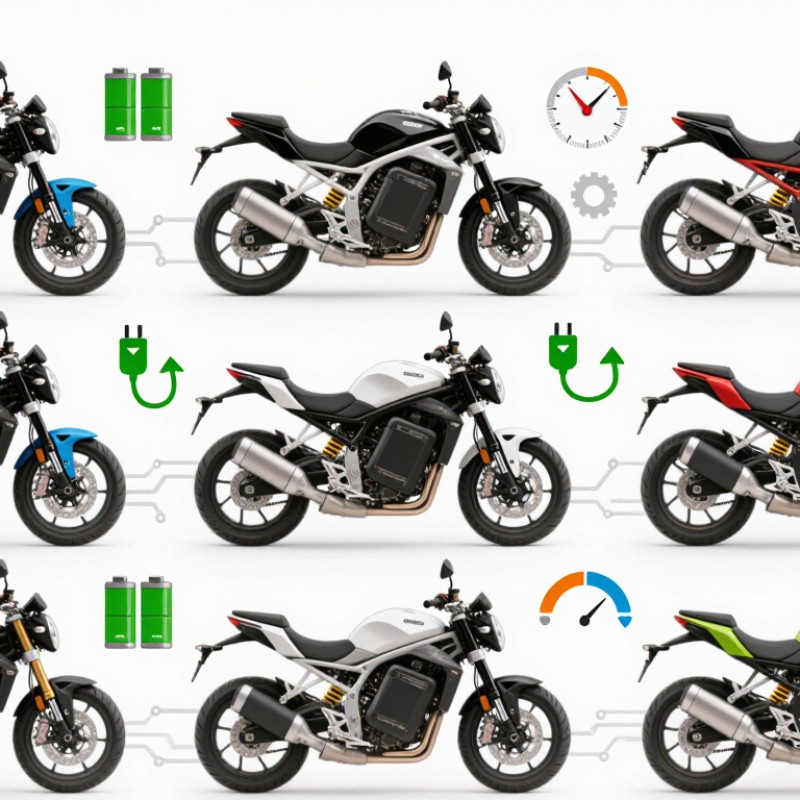
Top 10 Dual Battery Electric Motorcycles for Global Buyers

Dual-Battery Electric Motorcycles: Design and Operating Principles

A dual-battery electric motorcycle uses two battery packs to supply its motor, but the layout varies. Packs may work together through a shared battery-management system, or one may serve as a removable reserve. The system monitors voltage, current, and temperature, helping prevent unsafe operation and uneven discharge. Small detail. It matters.

The International Energy Agency’s Global EV Outlook 2024 reports close to 14 million electric two- and three-wheelers sold worldwide in 2023. That scale makes practical battery design increasingly important. Two packs can increase stored energy and reduce charging interruptions, but they do not automatically double riding range. Extra weight, speed, hills, tire pressure, and cold weather all affect consumption. A larger pack can feel reassuring, yet it may also make a motorcycle harder to maneuver.

Buyers should check usable capacity, charging time, pack weight, and whether both batteries charge together. With removable packs, compare their handles and locking points; a bulky pack is awkward on apartment stairs. Not always obvious. Ask how the controller shares power and what happens when one pack runs low. Specifications can look tidy on paper, while real-world range remains less predictable. That deserves a little skepticism.

How to Evaluate Range, Charging, Performance, and Battery Safety

A dual-battery motorcycle should be judged by usable range, not the largest number on its display. The International Energy Agency’s Global EV Outlook 2024 estimates that about 13 million electric two- and three-wheelers were sold worldwide in 2023. That growth makes careful comparisons more useful. Test range with a realistic load, repeated stops, and a familiar route; hills and cold weather can change the result. Small details matter. Note whether both packs discharge together, and whether one can be removed for charging. Check charging time from the same starting level, plus the charger’s rated input. A long advertised range can still disappoint.

Compare acceleration with both batteries partly depleted, not only fully charged. A heavy second pack may improve distance but affect handling, especially during slow turns. Check the battery management system’s protections, connector condition, and the maker’s published temperature limits. Ask whether each pack has independent monitoring and whether charging pauses after a fault. The U.S. Department of Energy’s 2023 report on lithium-ion battery research identifies heat and charging conditions as important factors in battery performance and life. Still, a report cannot verify a particular motorcycle. I would question vague safety claims. Inspect the packs, confirm their markings and test documentation, and avoid charging damaged or unusually hot batteries.

Ten Dual-Battery Electric Motorcycles for International Buyers

For international buyers, dual-battery electric motorcycles deserve comparison beyond advertised range. The International Energy Agency’s Global EV Outlook 2024 reports that electric two- and three-wheeler sales reached about 10 million in 2023, showing the scale of this fast-changing market. Yet figures vary by test cycle, rider weight, speed, hills, and temperature. Range is not everything. When assessing ten dual-battery motorcycles, compare usable battery capacity, charging time, pack weight, and whether both batteries can be removed or charged together. A second pack may extend a trip, but it also adds weight and replacement cost.

Battery economics matter too. BloombergNEF’s 2024 Battery Price Survey put the average lithium-ion pack price at US$115 per kilowatt-hour, down 20% from 2023. That is a broad industry average, not a quote for a motorcycle battery or a prediction of showroom prices. Check local service access, connector and charger compatibility, warranty coverage, and replacement-pack availability before buying across borders. Small details matter. A heavy battery can be awkward on apartment stairs; a charger that needs several hours may not suit a delivery shift. I would treat claimed range as a starting point, not a promise. Published tests rarely reproduce every buyer’s roads or weather.

Comparing Models by Price, Specifications, and Intended Use

Price comparisons for dual-battery electric motorcycles need context. A lower sticker price may cover only one battery, so check what the quoted package includes. Compare local prices in entry-level, mid-range, and premium groups; import fees and battery warranties can shift the real cost. Some listings are frustratingly vague.

Specifications should show usable battery capacity, charging time, motor output, and battery weight. For each of ten candidates, compare claimed range with the distance expected from ordinary riding. Hills, cold weather, cargo, and frequent stops can reduce it. Ask whether both batteries power the motorcycle together or whether one serves as a reserve. That detail changes daily convenience. A removable pack is useful when indoor charging is easier than parking beside an outlet.

Match intended use to the figures. Lightweight commuter models suit short urban trips and tight parking. Mid-range choices may better handle longer commutes, while sturdier, higher-capacity versions can carry a passenger or heavier loads. Test braking, seat comfort, and low-speed balance, not just acceleration. Check the fine print. Published range figures rarely describe every rider’s conditions, and comparing them directly can mislead. A useful shortlist records price, included batteries, capacity, charging time, realistic route needs, and support availability for each model.

Global Availability, Regulations, and Ownership Considerations

For global buyers, dual-battery electric motorcycles are not equally available everywhere. The IEA’s Global EV Outlook 2024 reports that nearly 10 million electric two- and three-wheelers were sold worldwide in 2023, with sales concentrated in a few major markets. That scale signals a growing sector, not universal access to models, spare batteries, or trained technicians. Check whether the second battery is included, optional, or only supported in certain regions. Small detail. Big ownership difference.

Rules also shape what can be registered and ridden. Vehicle classification, approval requirements, lighting, braking, and speed limits vary by country and sometimes by region. A motorcycle approved in one market may need different documentation elsewhere. Before buying, request local registration evidence and confirm that replacement batteries and diagnostic service are available nearby. For shipping, ask for battery test documentation aligned with UN Manual of Tests and Criteria, subsection 38.3. Requirements can change; verify with local authorities and the carrier.

Tips: Confirm the usable range with both batteries fitted, then ask how the motorcycle behaves if one battery is removed or depleted. Get warranty terms in writing. A longer range sounds reassuring, but daily charging access may matter more.

FAQS

How does a dual-battery electric motorcycle use its batteries?

The packs may supply power together through a shared management system. In some designs, one pack acts as a removable reserve. Small detail.

Do two batteries automatically double riding range?

No. Extra weight, speed, hills, tire pressure, and cold weather affect energy use. Range varies.

What does the battery-management system monitor?

It can monitor voltage, current, and temperature. This helps reduce unsafe operation and uneven battery discharge.

Can both batteries charge at the same time?

It depends on the motorcycle’s design. Ask whether both packs charge together and how long charging takes.

What should buyers check about removable batteries?

Check pack weight, handles, and locking points. A bulky battery can be awkward to carry up apartment stairs.

What happens when one battery runs low?

The answer depends on how the controller shares power. Ask the seller to explain the changeover before buying.

Why might advertised range differ from everyday riding range?

Test conditions may not match your roads, rider weight, speed, or weather. Treat the figure as a starting point, not a promise.

What should international buyers check before purchasing?

Check charger and connector compatibility, local service access, warranty coverage, and replacement-pack availability. Cross-border support can be less straightforward than it looks.

Does a larger battery always make a motorcycle easier to use?

Not necessarily. More stored energy can mean fewer charging stops, but added weight may make the motorcycle harder to maneuver. A trade-off worth testing.

Conclusion

A Dual battery electric motorcycle uses two battery packs to increase usable energy, support flexible charging, or improve power delivery. Understanding how the packs work together helps buyers assess real-world range, charging time, performance, and battery safety. Important considerations include how riding speed, terrain, weather, payload, and charging access may affect everyday use, as well as the guidance provided for battery care and storage.

This overview introduces ten options for international buyers and compares them by price, specifications, and intended use, from daily commuting to longer recreational rides. It also considers availability, local vehicle requirements, service support, and the practical costs of ownership. By weighing these factors against personal needs and typical routes, readers can make a more informed choice without relying on headline range or performance figures alone.

Charlotte

Charlotte

Charlotte is a professional marketing specialist who helps customers better understand the company’s products and the ways they can support practical needs. With strong product knowledge and a careful, research-driven approach, she regularly contributes expert articles to the company website. Her......