Award-winning British electric motorcycles — now in the USA
Flexible finance available — Learn more
New to riding? Explore the New Rider Program
0%

A British electric motorcycle can mean a bike designed by a British company, built in Britain, or simply suited to riders on British roads. Those meanings are not always the same. This guide looks at the main types by how people use them, rather than treating “British” as a single technical category. The market is changing, and model availability can shift.

Urban commuters are built for short trips, frequent stops, and easier parking. Roadsters offer a more upright riding position for mixed journeys. Sport-focused electric motorcycles put greater emphasis on acceleration and handling, while adventure-style models aim to handle longer rides and rougher surfaces. Retro-inspired bikes bring classic lines to modern electric power. Some categories overlap. A compact roadster, for example, may work well for commuting too.

The right type depends on more than appearance. A rider should compare usable range, charging time, battery access, seat comfort, and the location of nearby service support. A chilly ride through town can affect practical range, and a quoted figure may not match everyday use. Small details matter. Charging at home is different from relying on public points, especially when the bike is parked outside. There is a catch: electric motorcycles are still developing, so choices may be limited in some styles or price brackets. This overview will explain what each type offers, where its compromises appear, and which questions are worth asking before choosing a British electric motorcycle.
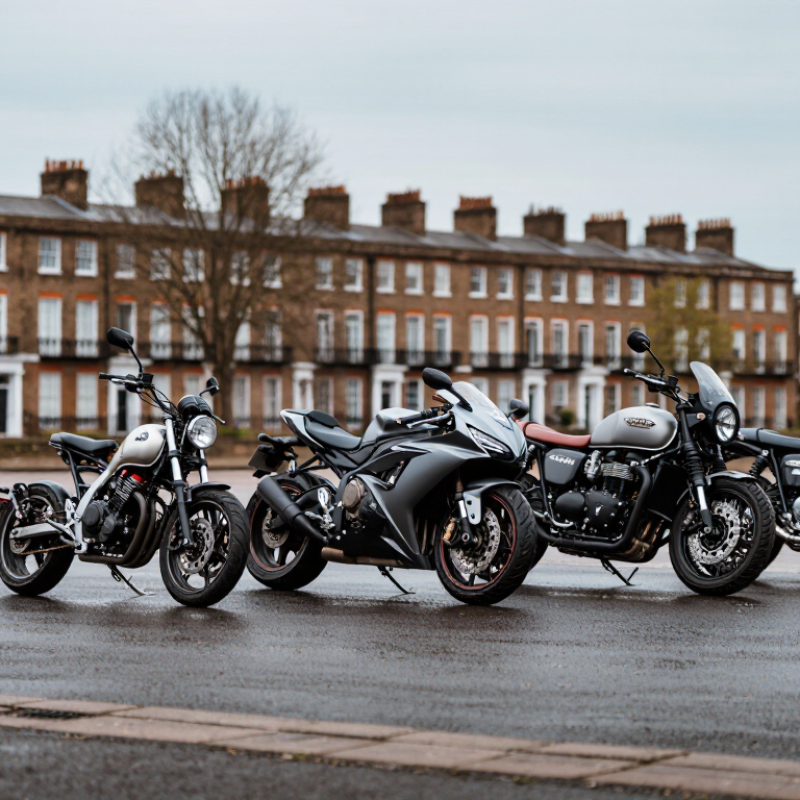
What Are the Top Types of British Electric Motorcycles?

Urban Commuter Electric Motorcycles from British Makers

A British-made electric motorcycle for urban commuting should be judged by its daily route, not its headline speed. The Department for Transport’s National Travel Survey 2023 puts the average trip in England at roughly six miles. For that kind of journey, predictable acceleration, easy low-speed control, and a manageable charging routine may matter more than maximum range. Think stop-start traffic, wet gloves, and a narrow space beside a bike rack. Small details count.

The IEA’s Global EV Outlook 2024 reports nearly 10 million electric two- and three-wheelers sold worldwide in 2023, about 14% of total sales in the category. That is a global figure, not evidence of equal demand in Britain. Still, it points to a growing role for electric two-wheelers in short urban trips. British makers can make commuter models more useful through clear real-world range figures, accessible servicing, and batteries suited to overnight charging. Yet published range can flatter a calm test ride. Cold weather, hills, and repeated acceleration may reduce it. Buyers should compare a model’s usable range with their own route, and allow room for an imperfect estimate.

Retro and Heritage-Style British Electric Motorcycles

Retro and heritage-style British electric motorcycles draw on familiar British roadster, café-racer, and scrambler shapes. Their appeal often starts with details: a rounded tank-like body, narrow seat, spoked-look wheels, and simple circular lighting. These cues create a sense of history, even when the machine uses a modern battery and electric drive.

Roadster designs usually suit everyday rides, with an upright posture and controls that feel approachable in traffic. Café-racer styling tends to bring a longer reach and a firmer seat, which may look striking but can tire some riders on longer journeys. Scrambler-inspired versions often add wider handlebars and more ground clearance. That does not make them suitable for every rough trail. Styling can suggest more ability than the tyres or suspension provide.

The quiet motor changes the experience. At a stop, there is no idling vibration, and low-speed acceleration can feel immediate. Useful details include a clear battery display, weather-resistant controls, and a seat that stays comfortable after an hour. Looks matter. But range depends on speed, temperature, rider weight, and route, so published figures need context. Check charging time and battery capacity alongside the design; a beautiful silhouette cannot make a short-range commute practical. And some heritage details are purely decorative. That is worth remembering.

What Are the Top Types of British Electric Motorcycles? — Retro and Heritage-Style

Retro electric motorcycles may take cues from classic roadsters, café racers, scramblers, or bobbers. These are styling categories; UK motorcycle licence classes are determined by power, not appearance.

The UK A1 category is limited to 11 kW of maximum continuous rated power, while A2 is limited to 35 kW. These limits apply to electric motorcycles as well as other motorcycles; A2 motorcycles must also meet a power-to-weight ratio limit.

Sport and Performance Electric Motorcycles Made in Britain

British sport and performance electric motorcycles are designed around immediate torque, controlled handling, and repeatable power delivery. A quick surge feels exciting, but useful performance also depends on how smoothly the motor responds through a corner. Look for clear specifications on power, battery capacity, charging time, and weight. Numbers matter. So does balance.

A well-engineered chassis should feel composed when braking hard or changing direction, not merely fast in a straight line. Battery placement affects that feeling, while suspension quality can make rough country roads less tiring. Range deserves careful attention: sustained high-speed riding and frequent acceleration can reduce distance between charges. That trade-off is easy to underestimate. A short test ride may not reveal it.

“Made in Britain” can describe different stages of production, from design and assembly to component manufacture. Buyers should check what the claim means and whether service support is available nearby. A useful test ride includes ordinary roads, tight turns, and a firm stop, where permitted and safe. Ask how performance changes as the battery charge falls. Some specifications look impressive on paper, but real-world feel is not always captured there.

Electric Off-Road and Trials Motorcycles from British Brands

British electric off-road and trials motorcycles are built for narrow tracks, rocky climbs, and low-speed control. Their strongest advantage is immediate torque, which helps riders ease over roots without repeatedly changing gears. The motors are quiet, too. That makes small changes in tire grip easier to hear, though wind and trail noise still matter.

Trials models prioritize balance and precise throttle response over long-distance range. A light frame can help riders pivot around stones or lift the front wheel across a ledge. Off-road models usually offer more suspension travel and a seat suited to longer stretches. Battery placement affects handling, so a well-balanced bike can feel calmer on loose ground. Specifications vary, and advertised range may not reflect steep, muddy riding.

Charging access deserves attention before choosing a motorcycle. A cold battery or repeated climbs can reduce usable riding time, so riders should check manufacturer guidance and plan realistic sessions. Keep an eye on connectors after wet rides. Small details matter. Service support and replacement parts are practical concerns, even for a mechanically simple electric drivetrain. I’d also test the throttle on uneven terrain; a bike that feels smooth on flat ground may take practice on slippery rocks. Not every rider will prefer that feel.

What Are the Top Types of British Electric Motorcycles? - Electric Off-Road and Trials Motorcycles from British Brands

A practical comparison of electric off-road and trials motorcycle types. Features and availability vary by model; UK-origin electric motorcycle offerings are particularly associated with trials and youth riding.

Motorcycle type Main purpose Typical design and riding characteristics Best suited to Key considerations
Electric youth trials motorcycle Learning balance, throttle control and low-speed off-road skills. Compact frame, smaller wheels and adjustable controls; trials-style layouts generally prioritise manoeuvrability over carrying a passenger or luggage. Young or beginner riders using suitable private land or supervised practice areas. Choose a size and power setting appropriate to the rider. Riding access, supervision and protective equipment remain important.
Electric adult trials motorcycle Negotiating technical obstacles at low speed, often in organised trials events. Lightweight, compact construction and responsive power delivery support precise control; trials bikes commonly have minimal seating or are designed to be ridden standing. Experienced riders interested in obstacle practice and trials competition. Range depends heavily on terrain, riding style and battery capacity. Check event regulations and local access rules.
Electric enduro motorcycle Sustained off-road riding over varied terrain, including climbs, tracks and rough ground. Typically uses a full-size motorcycle layout with suspension and tyres intended for uneven surfaces; battery and motor are designed for repeated acceleration and climbing. Riders seeking longer off-road sessions rather than low-speed obstacle-only riding. High loads, soft ground and steep climbs can reduce riding time. Confirm charging options and whether the bike is approved for the intended use.
Electric trail motorcycle Recreational riding on appropriate trails and off-road routes. Usually balances manageable power, suspension travel and ride comfort; equipment and road-legal status differ between models. Recreational riders who want a general-purpose off-road setup. Do not assume an off-road motorcycle can be used on public roads or public rights of way; check its homologation and the rules for each route.
Electric motocross motorcycle Closed-course motocross riding on purpose-built circuits. Designed for jumps, repeated acceleration and demanding track surfaces, with competition-style suspension and off-road tyres. Track riders and competitors using authorised motocross venues. Track access, noise rules, charging facilities and event eligibility can affect suitability; specifications vary substantially by model.

Note: Motorcycle category alone does not establish road legality, competition eligibility or permitted riding locations. Check the individual vehicle’s documentation and applicable local regulations.

FAQS

What matters most when choosing an electric motorcycle for urban commuting?

Judge it by your daily route, not its headline speed. Smooth acceleration and easy low-speed control help in stop-start traffic.

How far can an urban electric motorcycle usually travel?

Many daily journeys are short, averaging about six miles in England. Cold weather, hills, and repeated acceleration can reduce the usable range.

Should riders trust the published range figure?

Treat it as an estimate, not a promise. Leave extra battery capacity for rain, traffic delays, and an imperfect calculation.

What charging routine suits regular commuters?

Overnight charging can suit short daily travel. Check the charging time and whether the battery fits your home routine.

What specifications should buyers compare?

Compare power, battery capacity, charging time, weight, and real-world range. Numbers matter, but balance matters too.

How should a performance electric motorcycle feel on the road?

It should deliver immediate torque without feeling abrupt. Good handling remains composed during braking, tight turns, and rough road sections.

Does battery placement affect riding comfort?

Yes. Battery placement influences balance and handling. A well-balanced motorcycle may feel steadier when changing direction.

What should a useful test ride include?

Try ordinary streets, tight turns, uneven surfaces, and a firm stop where safe and permitted. Ask how performance changes as the battery charge falls.

What does “made in Britain” actually mean?

It may refer to design, assembly, or selected components. Check the production details and confirm nearby servicing is available.

What is easy to underestimate when buying an electric motorcycle?

High-speed riding can reduce the distance between charges. A short test ride may look convincing, but it cannot reveal everything.

Conclusion

British electric motorcycles span several riding styles, from practical urban commuters to machines built for recreation and performance. Commuter models are designed for everyday travel, often emphasizing manageable size, smooth acceleration, and convenient charging. Retro and heritage-style motorcycles take inspiration from classic shapes and details, pairing a familiar appearance with quiet electric power and modern usability.

For riders seeking a more dynamic experience, sport and performance models focus on responsive handling and stronger acceleration. Electric off-road and trials motorcycles, meanwhile, are suited to exploring trails or tackling technical terrain, with lightweight designs and controlled power delivery. Together, these types show how British electric motorcycle design can serve a wide range of preferences, whether the priority is practical transport, classic styling, spirited road riding, or adventures away from paved streets.

Ethan Brooks

Ethan Brooks

Ethan Brooks is a professional marketing specialist with a deep understanding of the company’s products, services, and the needs they are designed to address. He regularly contributes expert articles to the company website, sharing clear, practical insights that help readers understand product......