High-Demand Fast Charging Electric Motorcycles
Direct factory supply featuring advanced Battery Management Systems (BMS), high C-rate lithium cells, and EEC/DOT street-legal homologation for worldwide B2B buyers.
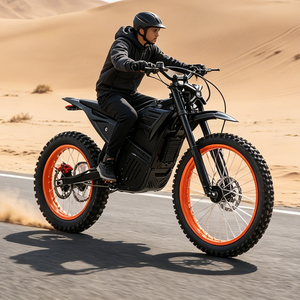
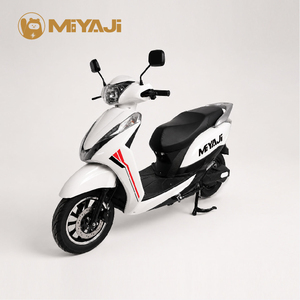
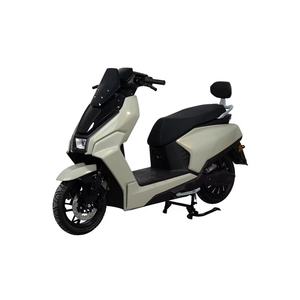
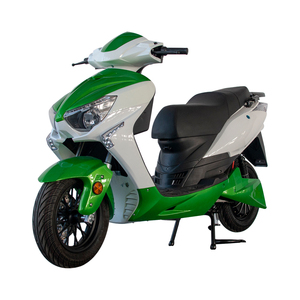
Why Global Importers Source Fast Charging Motorbikes from China
Empirical technical indicators driving the rapid transition from legacy internal combustion engine (ICE) two-wheelers to high-efficiency EV powertrains.
Next-Gen Fast-Charging Electric Motorcycle Technology & Market Dynamics
The global light electric vehicle (LEV) sector is experiencing a paradigm shift. Driven by urban zero-emission mandates, skyrocketing fuel costs, and the commercial explosion of last-mile delivery services, global demand for high-speed, fast-charging electric motorcycles has accelerated exponentially. China stands at the epicenter of this hardware and battery chemistry evolution, controlling over 80% of the worldwide lithium-ion supply chain and pioneering automotive-grade dual-battery powertrains.
High C-Rate Lithium Chemistry
Transitioning from standard 0.5C charging rates to 3C/5C fast-charging lithium NCM and LiFePO4 cells. This architecture enables 0% to 80% state-of-charge (SoC) replenishment within 30 to 45 minutes without compromising thermal stability.
Automotive-Grade CAN-Bus BMS
Intelligent Battery Management Systems utilizing Controller Area Network (CAN-bus) protocols continuously balance cell voltage, monitor internal impedance, and execute active thermal dissipation during high-amp fast charging.
CKD / SKD Modular Export Logistics
To minimize international freight tariffs and import duties, leading Chinese suppliers export vehicles via Completely Knocked Down (CKD) or Semi-Knocked Down (SKD) kits, matching local assembly capabilities worldwide.
Technical Comparison: Conventional Charging vs. Advanced Fast-Charging Powertrains
Understanding the engineering metrics is critical for B2B procurement managers, OEM brand owners, and fleet fleet operators evaluating supplier capabilities.
| Technical Parameter | Standard E-Motorbike (Legacy 48V/60V) | Advanced Fast-Charge E-Motorbike (72V/96V) | B2B Operational Advantage |
|---|---|---|---|
| Battery Cell Architecture | Standard Lead-Acid / Standard NCM (0.5C) | Automotive 3C Fast-Rate LiFePO4 / High-Density NCM | Substantially higher power density, zero memory effect |
| Charging Duration (0-80%) | 6.0 to 8.0 Hours | 0.5 to 1.5 Hours (with On-Board Fast Charger) | 90% reduction in vehicle idle downtime for commercial fleets |
| Controller Efficiency (FOC) | Square-Wave Controller (<82% Efficiency) | Field-Oriented Vector Sine-Wave Controller (>94%) | Smoother acceleration curves, extended battery range per charge |
| Motor Architecture | Basic Brushless Hub Motor (800W–1200W) | IP67 Mid-Drive Liquid/Air Cooled Motor (3000W–6000W) | Higher continuous torque output, superior thermal headroom |
| Thermal Protection | Passive Air Cooling | Phase-Change Thermal Pads + Active BMS Cutoff | Prevents thermal runaway during rapid high-amperage charging |
Key Future Procurement Trends for Electric Motorbike Exporters
As global regulatory frameworks tighten—exemplified by the European Union's Euro 5b compliance updates and strict US DOT/EPA zero-emission vehicle mandates—purchasing managers must align with manufacturers adopting these critical technology trajectories:
1. Dual Swappable Battery Systems for Home & Station Charging
Modern urban riders and commercial delivery workers often lack access to dedicated garage wallboxes. The market is shifting rapidly toward dual removable battery modules (under 10kg per pack). Riders can charge packs indoors via standard household outlets or plug the vehicle into high-output fast chargers.
2. Standardization of Type 2 / SAE J1772 Charging Interfaces
Exporters are increasingly integrating Automotive Type 2 (IEC 62196) and J1772 EV inlet ports onto high-performance 72V electric motorbikes. This allows e-motorcycles to plug directly into public Level 2 EV charging stations alongside electric cars, dramatically expanding intercity mobility.
3. Smart Telematics & Fleet Management Cloud Platforms
Commercial importers sourcing from China now demand pre-installed IoT (Internet of Things) hardware modules. Integrated GPS tracking, remote BMS diagnostics, OTA (Over-The-Air) firmware updates, and keyless mobile app access are now standard requirements for logistics fleets.
4. Lightweight Carbon Steel & Aluminum Alloy Chassis
To counteract the weight of high-capacity lithium battery arrays, leading Chinese manufacturers are deploying robotic TIG-welded aluminum alloy and high-tensile steel frames. This yields high structural stiffness, DOT-compliant load capacities, and optimized power-to-weight ratios.
Why OEM/ODM Partners Trust Our Chinese Supply Chain Network
Combining decades of precision two-wheeler frame craftsmanship with state-of-the-art cleanroom battery pack assembly lines.
Global Compliance Certification
Every vehicle platform undergoes rigorous validation to meet regional import regulations, including European EEC/e-Mark homologation, US DOT & EPA clearance, CE safety standards, and UN38.3 battery transport certification.
Comprehensive Testing Protocols
Before leaving the factory floor, vehicles undergo 100% automated dyno testing, IPX7 chassis water-wading tests, 3D laser frame alignment checks, and high-current BMS thermal shock stress testing.
End-to-End Customization Services
Full OEM support including custom frame geometry, bespoke fairing colorways, private-label branding, customized LCD/TFT digital dashboards, and tailored motor controller tuning curves.
Frequently Asked Questions for Sourcing Fast Charging Electric Motorcycles
Essential technical and logistical insights for international distributors, brand importers, and fleet managers.
Accelerate Your E-Mobility Business Today
Request wholesale catalog pricing, detailed technical specification sheets, EEC/DOT certification documentation, or custom OEM/ODM manufacturing quotes directly from our engineering team.