Featured Custom Electric & Dual-Sport Motorcycles
Explore our industrial-grade lineup engineered for urban commuting, commercial logistics, shared rental fleets, and high-performance off-road applications.
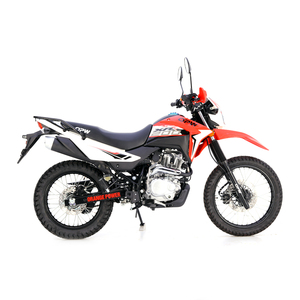
Orange Power OPW XR200CC Dual-Sport Off-Road Motorcycle Air-Cooled with BOSCH EFI CGB200 Economy Model
Inquire Now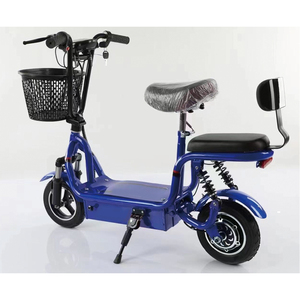
800W 48V Unisex High-Powered Electric Scooter Portable 10inch Fat Tire Smart Battery Open Off-Road 45-55km/h 400kg Payload
Inquire Now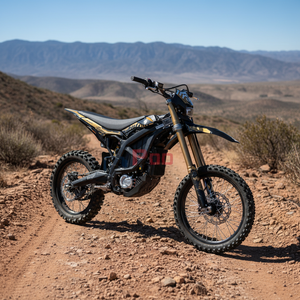
Cheap Dirt Bike Electric off Road Motorcycles 21kw Turbo Cross Motorcycle Dirt Bikes Sur Ron Ultra Bee
Inquire Now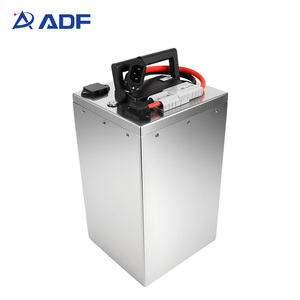
ADF Top Selling Lifepo4 Swappable Battery 60V 72V 40Ah 50Ah 100Ah 300Ah Lithium Battery for Electric Motorcycle Tricycle
Inquire Now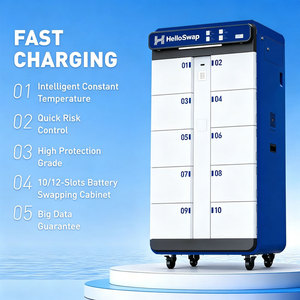
HelloSwap Scooter Bike Battery Swap System Battery Swapping Station for Commercial Fleets
Inquire Now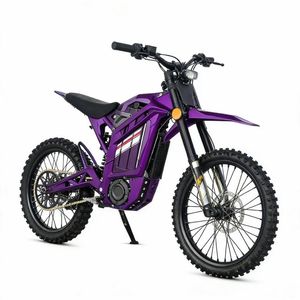
Dual Sport Electric Dirt Bike 85km/h Street Style Motorcycle 72V 36Ah Lithium Battery 8000W Mid Drive For City And Trail
Inquire Now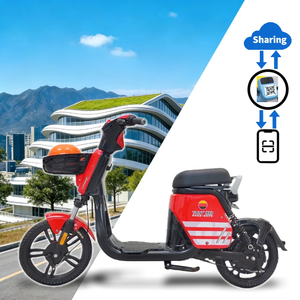
Dual-Use Electric Motorcycle for Sharing & Short-Term Rental with Swappable Battery System
Inquire Now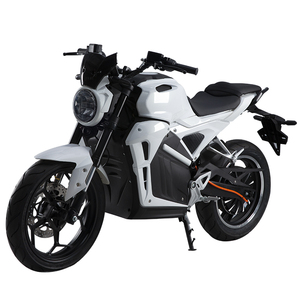
Manufacture Professional High-Speed Racing Electric Motorcycle High Quality 2000W Long Range 72v Brushless Motor Big Power V8
Inquire NowState-of-the-Art Manufacturing & Custom OEM/ODM Engineering
Bridging classic British motorcycle craftsmanship aesthetics with China's top-tier electric vehicle supply chain matrix.
Custom Frame & Chassis Prototyping
Engineered around lightweight high-tensile steel tubing and seamless robotic-welded aluminum alloy frames. Our structural integrity testing ensures resistance to torsional stress across urban high-speed transit and demanding off-road cross-country terrains.
BOSCH EFI & Advanced Powertrain Calibration
Integration of high-efficiency Field-Oriented Control (FOC) vector controllers paired with genuine BOSCH Electronic Fuel Injection (EFI) hybrid-assist engines or pure-electric PMSM mid-drive motors ranging from 800W to 21kW turbo peak power output.
Smart LiFePO4 & Swappable Battery Systems
Proprietary Battery Management Systems (BMS) with real-time CAN-bus telemetry, active thermal management, and IP67 waterproof enclosures. Perfectly synchronized with automated cabinet battery swapping stations for instant commercial fleet deployment.
Global Regulatory Homologation (EEC / DOT / CE)
All custom vehicle builds are pre-engineered to meet stringent international homologation standards, including European L1e/L3e EEC CoC certification, US DOT compliance, UN38.3 battery transport standards, and UL2271 safety mandates.
Total Cost of Ownership (TCO) Optimization
Direct OEM manufacturing pricing enables global distributors, brand owners, and fleet operators to achieve maximum gross margins while providing end-users with maintenance costs that are up to 75% lower than traditional internal combustion engine (ICE) vehicles.
End-to-End OEM/ODM Turnkey Workflow
From initial 3D industrial design rendering, mock-up prototyping, and tooling fabrication to automated robotic assembly and CKD/SKD global logistics—we streamline your brand’s journey from concept to mass commercial rollout.
Industrial Comparison Matrix: Electric vs. ICE Motorcycles
A detailed engineering breakdown evaluating powertrain efficiency, maintenance cycles, energy density, and operational expenses for B2B procurement decision-makers.
| Engineering Parameter | High-Performance Electric (72V/21kW) | Swappable Fleet Electric (60V/72V) | Traditional ICE (125cc - 200cc) |
|---|---|---|---|
| Powertrain Architecture | PMSM Mid-Drive + FOC Controller | Brushless Hub / Mid-Drive Motor | Air-Cooled 4-Stroke Engine + Carb/EFI |
| Peak Power Output | up to 21kW (28.5 hp) | 2,000W – 8,000W | 8.5kW – 11.5kW |
| Energy Storage & Cell Chemistry | High-Density NCM Lithium-Ion Pack | Swappable LiFePO4 (2,000+ cycles) | Liquid Gasoline Tank (10L - 14L) |
| Refueling / Energy Transfer Time | Fast Charge (1.5 - 2 Hours) | 30-Second Battery Swap | 3 Minutes at Gas Station |
| Direct Energy Efficiency | > 92% Motor Efficiency | > 88% Hub Efficiency | ~ 22% Thermal Efficiency |
| Maintenance Overhead (Per 10k km) | Brake Pads & Tires Only | Brake Pads & Tires Only | Oil Filters, Spark Plugs, Belts, Valve Checks |
| Telemetry & IoT Capabilities | Standard 4G/GPS/CAN-Bus Board | Integrated Fleet IoT & Remote Cutoff | None / External Aftermarket Only |
Future Procurement Trends in the Global Electric Motorcycle Industry
Strategic insights for enterprise buyers, distributors, and mobility operators navigating the rapid transition toward zero-emission two-wheeler transport.
1. The Shift Toward Battery Swapping Infrastructure (BaaS Ecosystems)
In high-density urban environments and commercial last-mile delivery sectors, static plugged charging presents severe downtime bottlenecks. Procurement data indicates a massive trend shift toward Battery-as-a-Service (BaaS) platforms. Fleet operators are no longer purchasing single, fixed-battery vehicles; instead, they are deploying standardized 60V and 72V LiFePO4 swappable battery packs coupled with automated battery swap stations (such as the HelloSwap System). This architecture allows delivery riders to exchange depleted modules for fully charged packs in under 30 seconds, maintaining 100% operational uptime during peak commercial hours.
2. High-Voltage Platform Migration (72V to 96V Architectures)
Historically, electric two-wheelers relied on low-voltage 48V systems designed for low-speed moped categories. Today's commercial and recreational markets demand highway capability, faster acceleration, and higher payload capacities. Leading OEM manufacturers are transitioning standard product architectures to 72V and 96V systems. Higher voltage platforms significantly decrease current draw across wiring harnesses, reducing thermal dissipation, improving overall motor efficiency, and enabling sustained top speeds of 85km/h to 120km/h without over-heating the field-oriented controllers (FOC).
3. Integration of Smart Telemetry, CAN-Bus & Remote Fleet IoT
Modern B2B electric motorcycle procurement goes far beyond mechanical hardware. Enterprise buyers require real-time visibility into vehicle health, battery state of charge (SoC), location tracking, and predictive maintenance metrics. State-of-the-art vehicles are now built with unified CAN-bus communications protocols that aggregate data from the BMS, motor controller, digital instrument cluster, and onboard 4G telematics unit. This connectivity allows fleet directors to perform over-the-air (OTA) firmware updates, remotely diagnose fault codes, enforce geofencing boundaries, and disable stolen vehicles instantly.
4. Convergence of Retro Vintage Styling with Next-Gen Electric Drivetrains
Consumer adoption analytics indicate a surging market demand for classic, vintage-inspired aesthetics (such as café racer styling, exposed lattice frames, and sculpted fuel tank compartments repurposed as lockable helmet storage). Buyers want the soul and iconic visual presence of classic British motorcycling merged with quiet, maintenance-free, zero-emission electric performance. OEMs capable of delivering retro-styled chassis built over high-torque electric powertrains are capturing premium retail margins across Europe, North America, and Australasia.
Technology Development Pathways: Batteries, Controllers, & Frame Engineering
An authoritative technical analysis of breakthroughs defining the next decade of electric motorcycle manufacturing.
Advanced Battery Cell Chemistry: LiFePO4 vs. NCM
Battery technology selection dictates product viability. Lithium Iron Phosphate (LiFePO4) chemistry leads commercial and rental applications due to its exceptional thermal stability, non-combustible nature under mechanical puncture tests, and long cycle life exceeding 2,500 to 3,000 charge-discharge cycles at 80% Depth of Discharge (DoD). Conversely, Nickel Cobalt Manganese (NCM) cells remain the gold standard for high-performance racing and dual-sport dirt bikes where gravimetric energy density (Wh/kg) is paramount to achieve maximum acceleration and minimum unsprung chassis weight.
FOC Sine-Wave Inverters & Torque Vectoring
Square-wave controllers are obsolete in premium vehicle manufacturing. Modern custom electric motorcycles utilize Field-Oriented Control (FOC) sine-wave inverters equipped with 32-bit automotive microcontrollers. FOC algorithms continuously measure motor magnetic flux to deliver buttery-smooth throttle response, silent motor operation, and regenerative braking energy recovery efficiencies up to 15%. This translates directly into extended real-world range during stop-and-go city traffic.
Mid-Drive Motors vs. Direct-Drive Hub Motors
While hub motors offer low manufacturing costs and simple installation for budget urban scooters, PMSM mid-drive motors dominate high-performance street and off-road motorcycles. Mid-drive positioning optimizes vehicle center-of-gravity (50:50 weight distribution) and drastically decreases rear wheel unsprung mass. Paired with heavy-duty drive belts or 520-pitch chains, mid-drive powertrains provide superior suspension articulation, thermal isolation, and wheel torque multiplication ratios exceeding 300 Nm at the axle.
Robotic Welding & Modular Chassis Platforming
To ensure structural integrity across high-vibration off-road cross-country applications, leading Chinese OEM facilities utilize automated 6-axis robotic MIG/TIG welding cells. Modular platforming strategies allow manufacturers to use a standardized central frame structure while interchanging swingarms, battery cradles, subframes, and suspension geometry—enabling rapid ODM product diversification for distributors without massive tooling costs.
From Concept to Mass Production: The OEM/ODM Sourcing Roadmap
Our structured six-stage manufacturing protocol guarantees quality assurance, compliance verification, and seamless delivery for global enterprise clients.
Intent Mining & Specs Definition
Detailed consultation covering target market speed/range requirements, regional homologation rules (EEC/DOT), frame dimensions, color palette, logo branding, and target unit BOM cost.
3D CAD Modeling & Simulation
Engineering refinement of vehicle chassis geometry, finite element analysis (FEA) for stress loads, battery pack thermal airflow simulation, and digital wiring harness schematic design.
Rapid Golden Prototype Build
Fabrication of physical prototype units for real-world chassis dyno testing, controller ECU mapping, suspension tuning, and initial client ride evaluations.
Homologation & Certification
Submitting golden samples to accredited international test laboratories (TÜV, SGS) for electromagnetic compatibility (EMC), brake system testing, structural safety, and UN38.3 battery clearance.
Automated Mass Assembly
Pilot run validation followed by full-scale assembly line rollout. Every vehicle undergoes automated dyno testing, water tightness shower tests, and 100-point PDI quality audits.
CKD / SKD Global Shipping
Custom export packaging engineered to prevent transit shock damage. Flexible logistics support offering Completely Knocked Down (CKD) or Semi-Knocked Down (SKD) container loading for tariff optimization.
Frequently Asked Questions by Global Enterprise Buyers
Addressing essential technical, commercial, warranty, and logistical inquiries for streamlined B2B ordering.
What is the typical Minimum Order Quantity (MOQ) for custom OEM/ODM orders?
How do your swappable battery systems integrate with third-party sharing or fleet software?
What international homologation certifications do your motorcycles hold?
What is the warranty policy and spare parts SLA support for international distributors?
What is the typical production lead time from order placement to port shipment?
Can your factory manufacture dual-sport and off-road electric motorcycles with BOSCH EFI hybrid options?
Accelerate Your Fleet Electrification & OEM Distribution
Partner with China's leading custom electric motorcycle manufacturer. Connect with our senior vehicle engineering team today to receive detailed technical datasheets, factory pricing matrices, and custom prototype estimates.