Featured Compact Electric Motorbikes & Dirt Bikes
Explore our export-grade line of compact electric motorcycles, off-road dirt bikes, and commercial delivery scooters built with high-torque powertrains, swappable lithium packs, and EEC/DOT compliance.
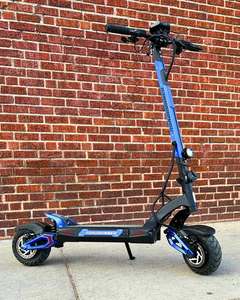
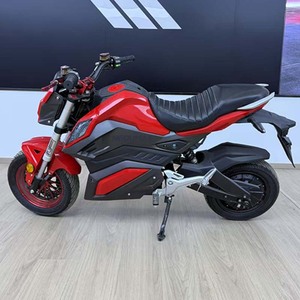
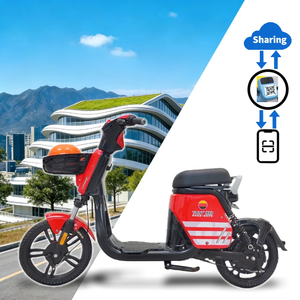
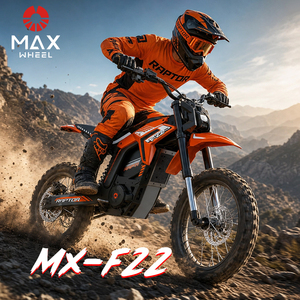
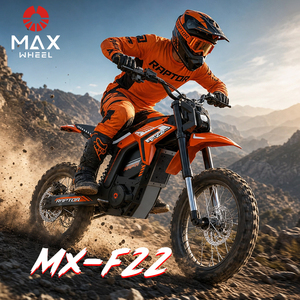
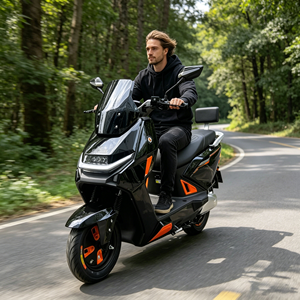
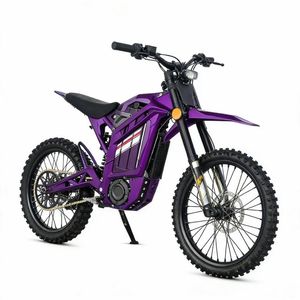
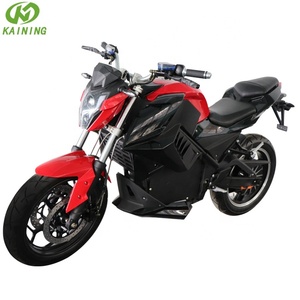
Global Compact Electric Motorbike Industry Analysis & Sourcing Guide
The global light electric vehicle (LEV) sector is experiencing a structural transition. Driven by urban congestion, stringent municipal zero-emission mandates, and rising fuel expenditures, urban commuters and commercial delivery fleets are moving away from traditional internal combustion engine (ICE) mopeds toward high-torque, zero-emission compact electric motorbikes. China remains the centerpiece of this industrial shift, commanding over 80% of global electric two-wheeler production capacities, battery integration supply chains, and advanced brushless motor technology developments.
For enterprise procurement officers, regional distributors, and B2B brand owners, navigating China’s manufacturing ecosystem requires evaluating structural vehicle engineering, battery management safety (BMS), international homologation (CE, EEC, L1e/L3e, DOT), and total cost of ownership (TCO). This comprehensive sourcing whitepaper evaluates technical developments, production standards, supply chain dynamics, and regulatory roadmaps necessary to execute high-margin, compliant importing operations.
Advanced Powertrain R&D
Integration of permanent magnet synchronous motors (PMSM) and high-efficiency FOC sine-wave controllers delivering up to 96% energy conversion and instant peak torque.
Automotive Safety & BMS
Custom LiFePO4 and NCM ternary battery architecture equipped with CAN-bus communication, temperature balancing, and over-current protective circuitry.
Global Homologation
Full factory alignment with EU EEC (L1e-B / L3e-A1), US DOT, and global ISO9001/IATF16949 quality control benchmarks for hassle-free customs clearance.
Enterprise Manufacturing Competencies & Export Infrastructure
As an established manufacturing partner specializing in light electric motorbikes and high-speed off-road platforms, our facilities integrate advanced robotic frame welding, automated powder-coating lines, and environmental simulation labs. We engineered our export production matrix to bridge the gap between high-volume cost efficiency and refined Western automotive finishing standards.
High-Precision Chassis Engineering & Structural Rigidity
A core differentiator of export-grade compact electric motorcycles lies in structural chassis metallurgy. Cheap domestic frames often employ low-grade carbon steel prone to fatigue cracking under sustained high speeds. Our manufacturing process utilizes high-tensile cold-drawn seamless steel tubing and aircraft-grade 6061-T6 aluminum alloys. Structural frames undergo finite element analysis (FEA) testing to handle dynamic load capacities exceeding 150 kg across rugged urban and trail environments.
| Vehicle Specification | Standard Urban Commuter (1200W-2000W) | Commercial Delivery / Fleet (3000W Swappable) | High-Performance Dirt / Dual Sport (8000W-12000W) |
|---|---|---|---|
| Target Category | City Commuting / Moped Class | Last-Mile Logistics / Sharing Fleet | Off-Road / Trail / Enduro |
| Motor Type | In-Hub Brushless DC (BLDC) | High-Torque Hub or Mid-Drive | Liquid/Air-Cooled PMSM Mid-Drive |
| Battery Chemistry | 60V/72V 20Ah Lithium-Ion | 72V Dual Swappable LiFePO4 / NCM | 72V 36Ah - 60Ah High-Discharge NCM |
| Top Speed Range | 45 km/h - 60 km/h | 50 km/h - 70 km/h | 85 km/h - 110+ km/h |
| Chassis & Suspension | Hydraulic Telescopic Front Fork | Reinforced Steel + Heavy Shock Absorbers | Adjustable CNC Aluminum Inverted Fork |
| IP Rating | IPX5 Vehicle / IP67 Battery | IPX6 Vehicle / IP67 Swappable Bay | IPX7 Fully Sealed Powertrain |
Integrated Electronics & Smart Telemetry (IoT Ready)
Modern commercial fleets and urban micro-mobility rental operators require real-time visibility over asset health. Our OEM export platforms feature optional 4G/GPS IoT modules integrated directly into the vehicle’s Controller Area Network (CAN). Fleet managers can remotely monitor state-of-charge (SOC), battery cell temperature, geo-fencing boundaries, remote diagnostic fault codes, and over-the-air (OTA) firmware updates, drastically reducing vehicle downtime and operational maintenance overheads.
Looking for Custom OEM/ODM Motorbike Manufacturing?
We provide full white-label customization including frame geometry modification, custom battery sizing, branding, EEC/DOT homologation support, and low-MOQ trial orders for regional distributors.
Global Compact Electric Motorbike Industry Trends (2026–2030)
Understanding market trajectories allows procurement leaders to future-proof their product portfolios against regulatory obsolescence and changing consumer preferences. Key technology trends shaping the next decade include:
1. Shift from Hub Motors to Central Mid-Drive Systems
While hub motors remain cost-effective for entry-level urban mopeds, high-performance urban and dual-sport electric dirt bikes are rapidly adopting centralized mid-drive motors paired with belt or chain reductions. Mid-drive configurations center vehicle mass, reducing unsprung weight on the rear wheel and significantly improving cornering stability, suspension responsiveness, and off-road handling characteristics.
2. Standardization of Swappable Battery Ecosystems
Charging anxiety and lengthy downtime remain primary hurdles for commercial operators. The market is standardizing around dual swappable battery architectures. Utilizing lightweight, quick-release aluminum casing designs, riders and delivery drivers can exchange depleted batteries at modular swapping stations in under 30 seconds. Battery packs are increasingly designed with universal connector interfaces (e.g., Chogori or Anderson high-current plugs) to streamline multi-brand fleet servicing.
3. Silicon-Anode & Solid-State Lithium Battery Adoption
As battery chemistry progresses past conventional NCM and LiFePO4 cells, next-generation compact motorbikes are testing silicon-anode lithium cells offering 20-30% higher gravimetric energy density. This allows manufacturers to reduce total vehicle curb weight while extending range capabilities beyond 120 km on a single charge.
B2B Procurement Strategy & Logistics Planning for Importers
Importing electric two-wheelers from China requires precise operational coordination across international customs compliance, dangerous goods (DG) logistics for lithium batteries, and supply chain lead-time management.
Navigating International Regulatory Homologation
Before committing to container-load orders, buyers must verify that vehicle specifications match destination market legal requirements:
- European Union (EEC / CoC): Requires vehicle type-approval under Regulation (EU) No 168/2013 (L1e-B for 45 km/h moped class; L3e-A1 for 125cc light motorcycle equivalents). Electric components must comply with EMC directive (ECE R10).
- North America (DOT / EPA / FMVSS): Vehicles exceeding 20 mph (32 km/h) require registration with the US Department of Transportation (DOT) and compliance with Federal Motor Vehicle Safety Standards (FMVSS), alongside NHTSA manufacturer identification numbers.
- Battery Transport Certification: Battery packs must carry UN38.3 testing certification, MSDS safety data sheets, and dangerous goods maritime shipping clearance (Class 9 hazardous cargo compliance).
Optimizing Container Loading & Total Logistics Costs
Logistics charges heavily impact landed unit costs. Compact electric motorbikes are typically shipped in SKD (Semi-Knocked Down) or CKD (Completely Knocked Down) packaging formats inside sturdy iron-crate wooden boxes. SKD packaging allows up to 30% more units per 40ft High Cube container compared to Fully Assembled (CBU) shipments, dramatically lowering ocean freight cost per unit.
Frequently Asked Questions (B2B Procurement FAQ)
Find answers to common questions asked by B2B buyers, fleet managers, and importers when sourcing compact electric motorbikes from China.
What is the typical Minimum Order Quantity (MOQ) for custom OEM orders?
What certifications do your compact electric motorbikes carry for export?
How do swappable battery systems benefit rental and fleet operators?
What is the lifespan and warranty policy for the lithium battery pack?
Can vehicle speed and power outputs be restricted for local road regulations?
How are spare parts, maintenance, and after-sales support managed for overseas buyers?
What is the estimated lead time from order confirmation to port dispatch?
How do you ensure vehicle quality control prior to shipment?
Partner with China's Premier Compact Electric Motorbike Manufacturer
Accelerate your market expansion with high-performance, compliant, and cost-optimized electric two-wheelers. Contact our engineering and export sales specialists today for technical catalogs, bulk price quotes, and OEM sample evaluation.