Executive Summary: Thailand’s EV Logistics Transformation & Sourcing Dynamics
Thailand’s last-mile delivery ecosystem is experiencing a massive paradigm shift. As Southeast Asia’s second-largest economy accelerates toward its ambitious national goal of 30% Zero-Emission Vehicles (ZEV) by 2030, commercial fleet operators across Bangkok, Chiang Mai, Chonburi, and Phuket are rapidly phasing out legacy Internal Combustion Engine (ICE) delivery scooters in favor of high-performance electric cargo motorbikes. Driven by Thailand’s National EV Policy Committee (EV 3.5 incentive package), rising petrol prices, and corporate ESG mandates from major logistics giants like Grab Express, Lineman, Shopee Xpress, Flash Express, and Kerry Express, the procurement of commercial-grade two- and three-wheeled electric utility vehicles has expanded exponentially.
However, operating commercial delivery vehicles in Thailand presents extreme environmental and physical challenges. Electric cargo motorbikes must endure ambient operating temperatures consistently exceeding 38°C, navigate severe flash flooding during the annual monsoon season, transport heavy payloads over 250kg to 400kg across congested urban grids, and operate on near 24/7 continuous shift schedules. Consequently, Thai fleet enterprises, B2B importers, and OEM brand distributors are seeking original Chinese manufacturing partners capable of delivering specialized engineering: heavy-duty high-tensile steel frames, IP67-rated waterproof electronics, heat-resistant LiFePO4 battery swapping chemistries, and seamless telemetry integration.
Strategic Sourcing Insight for Thai Importers: Under the ASEAN-China Free Trade Area (ACFTA), Chinese electric motorcycle manufacturers can issue Form E Certificates of Origin, enabling Thai importers to clear customs at 0% import duty rates. Combined with Thailand's local excise tax subsidies under EV 3.5, importing fully certified Chinese commercial electric cargo bikes delivers an immediate 35% to 45% reduction in total capital expenditure (CapEx) compared to European or domestic assembly options.
Why Chinese Electric Cargo Motorbike Manufacturers Lead the Global B2B Supply Chain
China commands over 82% of the global production capacity for electric two-wheelers and commercial utility tricycles. This market dominance is not merely a matter of scale; it is rooted in vertical integration across raw materials, cell manufacturing, proprietary BMS (Battery Management System) algorithms, high-torque BLDC/PMSM motor design, and automated chassis assembly. For the Thai commercial market, Chinese manufacturers provide three distinct competitive advantages that European and regional regional assemblers cannot match:
Advanced Battery Swapping Architecture
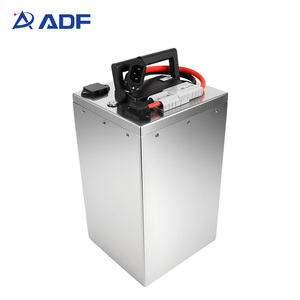
Standardized, hot-swappable dual battery configurations allow delivery riders to replace depleted packs in under 60 seconds at centralized swap kiosks, eliminating charging downtime during peak delivery hours.
Heavy Payload Structural Engineering
Reinforced cold-rolled steel alloy frames, heavy-duty hydraulic rear shock absorbers, and widened cargo racks rated for up to 400kg payload without compromised handling stability.
Monsoon & Thermal Protection
Fully sealed IP67 motor enclosures, waterproof wiring harnesses, elevated battery cradles, and thermal runaway-protected LiFePO4 chemistry designed for sustained heat resilience.
Detailed Benchmark: TCO (Total Cost of Ownership) Analysis for Thai Fleets
Commercial fleet operations in Thailand are governed by strict operating margins. When comparing traditional 110cc-125cc ICE delivery scooters (such as the Honda Wave or Yamaha Finn) against purpose-built 2000W Chinese commercial electric cargo motorbikes over a standard 36-month operational cycle (assuming 120 km daily mileage per vehicle), the financial superiority of electric adoption becomes indisputable.
| Performance & Cost Criteria | Standard 125cc ICE Cargo Scooter | Chinese 2000W Commercial Cargo EV | Operational Impact & Savings (THB) |
|---|---|---|---|
| Daily Operating Energy Cost (120 km) | ~96 THB (Gasoline @ 40 THB/L) | ~18 THB (Electricity @ 4.5 THB/kWh) | 81.2% Daily Energy Cost Reduction |
| 3-Year Maintenance & Servicing | ~24,000 THB (Oil, belts, filters, spark plugs) | ~6,500 THB (Brake pads, tire rotation) | 72.9% Maintenance Cost Savings |
| Engine/Motor Lifespan & Overhaul | Major overhaul required at 60,000 km | Brushless Motor rated for 100,000+ km | Zero engine overhaul downtime |
| Battery Swap Compatibility | Not Applicable (Refuel downtime) | Instant 60-second modular swap | Continuous 24/7 fleet utilization |
| Import Tax (Form E ACFTA) | Standard MFN Tariff Rate | 0% Import Duty with Form E | Significant initial CapEx savings |
Localized Application Scenarios in the Thai Market
A successful commercial EV strategy in Thailand requires matching specific vehicle architecture to local operational micro-environments. Chinese OEMs provide tailored body configurations engineered for diverse geographic and commercial usage profiles across the Kingdom:
1. Urban Last-Mile Express & Food Delivery (Greater Bangkok Area)
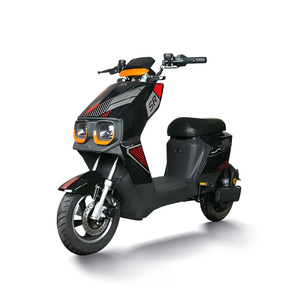
In high-density congested zones such as Sukhumvit, Silom, Yaowarat, and Huai Khwang, delivery riders navigate severe gridlock and narrow sub-sois (alleys). Compact 1200W-2000W electric motorbikes equipped with dual swappable 60V/72V lithium battery packs offer the agility of a standard scooter combined with top speeds of 65-80 km/h. Rear storage racks are engineered to accept insulated thermal delivery boxes up to 150 liters, featuring vibration-damping mountings to protect delicate food orders.
2. Heavy Freight & E-Commerce Logistics Parcels (Industrial Corridors)
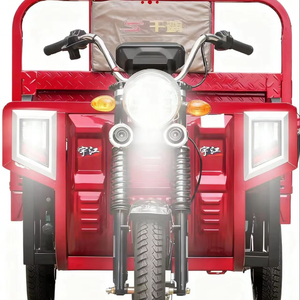
For courier companies operating across Thailand’s Eastern Economic Corridor (EEC)—including Chonburi, Rayong, and Chachoengsao—parcel volume demands heavy-duty carrying capacity. Open-body 3-wheel electric cargo tricycles equipped with high-torque 2000W differential motors and 400kg payload frames handle bulk delivery parcels, water jugs, and industrial components efficiently. Low center-of-gravity design prevents tip-overs during sharp turns on rural highways.
3. Island Logistics & Eco-Resort Micro-Hauling (Phuket, Koh Samui, Koh Chang)
Thailand’s resort islands enforce stringent noise and emission regulations to protect local tourism ecosystems. Electric cargo motorbikes featuring zero tailpipe emissions, silent belt drive options, and rust-resistant electro-coated chassis frames are replacing noisy diesel pickups for resort linen transport, food supply runs, and island parcel distribution.
Engineering Deep-Dive: Heat Management & Waterproofing for Monsoon Resilience
The tropical climate of Thailand is notoriously harsh on electric vehicle powertrains. High atmospheric humidity combined with road surface temperatures exceeding 50°C in April can cause severe thermal throttling in lower-tier battery management systems. Furthermore, monsoon flash floods in Bangkok regularly submerged roadways under 20-40 cm of water.
Top-tier Chinese manufacturers address these localized failure points through advanced structural engineering:
- Potting Compound Electronics Protection: Motor controllers and BMS circuit boards are fully encapsulated in high-thermal-conductivity silicone potting resins, rendering them completely impervious to water ingress, salt fog spray, and extreme humidity.
- IP67 Sealed Wheel Hub & Mid-Drive Motors: Dual-lip radial oil seals and nitrogen-tested motor casings ensure that submersions in floodwater during monsoon squalls do not contaminate internal copper windings or neodymium magnets.
- LiFePO4 Thermal Stability: Unlike volatile NMC (Nickel Manganese Cobalt) pouch cells that risk thermal runaway under continuous high-discharge heat, Lithium Iron Phosphate (LiFePO4) chemistry offers superior thermal stability up to 70°C ambient temperatures, providing a lifespan exceeding 3,000 charge cycles.
Regulatory Compliance & Importation Blueprint for Thai B2B Buyers
Navigating the regulatory landscape in Thailand is critical for commercial importers to ensure vehicles are fully road-legal and eligible for government EV subsidies. Chinese tier-1 suppliers assist Thai importers by pre-certifying vehicles according to strict local standards:
TISI (Thai Industrial Standards Institute) Certification
TISI standard 2915-2561 governs safety requirements for electric motorcycle traction batteries and electrical systems. Reputable Chinese manufacturers conduct rigorous UN38.3, IEC 62133, and ISO 12405 testing in accredited laboratories prior to shipment, enabling seamless TISI type-approval testing upon arrival at Laem Chabang Port.
DLT (Department of Land Transport) Vehicle Registration
To obtain blue license plates for public highway operation in Thailand, electric motorbikes must meet DLT power and dimension criteria: a minimum continuous motor power output of 250W, a top speed capability exceeding 45 km/h, and compliant headlamp/indicator light configurations. Leading Chinese cargo models come pre-configured with DLT-compliant lighting arrays and stamped chassis VIN plates.
Customs Duty Exemption via Form E (ACFTA)
By providing a valid Form E issued by China Council for the Promotion of International Trade (CCPIT) or China Customs, the standard customs tariff on electric two-wheelers drops from 20-30% down to exactly 0%. Combined with Thailand's reduced excise tax rate (down from 8% to 1-2% for qualifying electric motorbikes), legal importation delivers unmatched margin advantages.
Enterprise OEM/ODM Customization & Manufacturing Superiority
Referencing world-class automotive manufacturing standards, leading Chinese electric cargo motorcycle plants combine classic engineering heritage with modern automation. Operating out of specialized industrial parks spanning over 100,000 square meters, our manufacturing partners employ robotic frame welding, automated SMT PCB assembly lines, and enclosed dyno testing cells.
Custom B2B Fleet Branding & Specification Support: From custom fleet colors (matching corporate brand guidelines for Grab, Flash, or Kerry) to bespoke telemetry CAN-bus protocol integration for tracking software, Chinese suppliers offer full ODM services. Minimum Order Quantities (MOQs) start at flexible trial batch sizes for corporate fleet evaluations.
Quality assurance protocols include a 48-hour continuous burn-in test for battery packs, 100% waterproof monsoon simulation spray chambers, and full load dynamic incline testing. Furthermore, dedicated spare parts supply chains guarantee 10-year availability for structural components, brake assemblies, controllers, and wiring harnesses, ensuring maximum fleet uptime for Thai logistics operators.